
Letter from the Most Reverend John S. Bonnici,
Bishop of the Roman Catholic Diocese of Rochester

Letter from the Most Reverend John S. Bonnici, Bishop of the Roman Catholic Diocese of Rochester

Dear Friends in Christ,

In the Gospel of John, we read the beautiful story of the raising of Lazarus, the culmination of Jesus’ public ministry and miracles. Jesus had already worked many amazing miracles: He turned water into wine; drove out demons; gave the blind their sight; made the deaf hear; and made the lame to walk. Now, in an account full of tension and drama, Jesus confronts death itself and brings a dead man back to life. I love the exchange between Jesus and His friends Martha and Mary, the sisters of Lazarus, because it is an account of growing hope grounded in a firm faith in who Jesus is. It is an account that is very human and expresses the full range of emotion that we experience in the face of death. We read:

Martha said to Jesus, “Lord, if you had been here, my brother would not have died. [But] even now I know that whatever you ask of God, God will give you.” Jesus said to her, “Your brother will rise.” Martha said to him, “I know he will rise, in the resurrection on the last day.” Jesus told her, “I am the resurrection and the life; whoever believes in me, even if he dies, will live, and everyone who lives and believes in me will never die. Do you believe this?” She said to him, “Yes, Lord. I have come to believe that you are the Messiah, the Son of God, the one who is coming into the world.” […] When Mary came to where Jesus was and saw him, she fell at his feet and said to him, “Lord, if you had been here, my brother would not have died.” When Jesus saw her weeping and the Jews who had come with her weeping, he became perturbed and deeply troubled, and said, “Where have you laid him?” They said to him, “Sir, come and see.” And Jesus wept. So the Jews said, “See how he loved him.” […] And when he had said this, he cried out in a loud voice, “Lazarus, come out!” The dead man came out, tied hand and foot with burial bands, and his face was wrapped in a cloth. So Jesus said to them, “Untie him and let him go” (John 11:21-27; 32-36; 43-44).
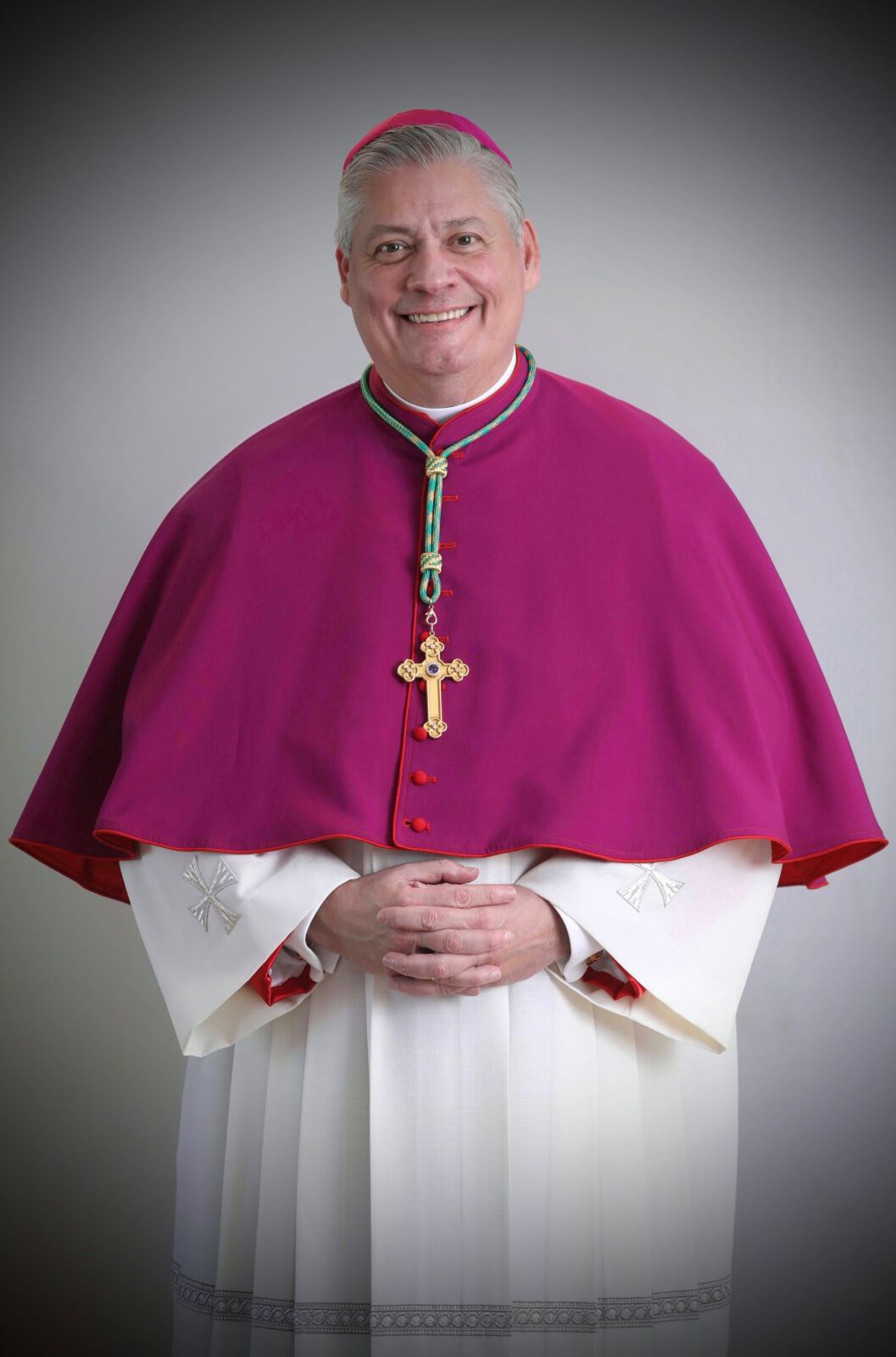
Bishop Salvatore Matano

Martha first encounters Jesus full of grief, and yet she is firm in faith. I know he will rise. I believe that you are the Messiah. She trusts Jesus. She remembers what He has done and trusts in His promises. Mary encounters Jesus in her grief, she comes to Him weeping. Jesus Himself is deeply moved when He sees Mary and He weeps. We see Jesus, the Savior of the world, understanding the depths of human sorrow. He does not stand apart from grief but enters into it with her. He shares the pain of loss and the tears of those who mourn.

And yet, this grief does not have the last word. Lazarus, come out. Lazarus emerges from the grave alive. What began in mourning ended in wonder and hope. The power of Christ over death is revealed, and the promise of resurrection shines forth.

When death touches our lives, it often brings with it sadness, uncertainty, and even fear. We grieve the loss of someone we love. We mourn their absence and face the mystery of death with heavy hearts. And yet, like Martha and Mary, we are not alone in our grief. Jesus Christ, the Resurrection and the Life, comes to us in our grief. He walks with us and turns our grief into hope. This is the purpose of the Church’s funeral rites. We enter in sadness and grief, but having encountered Jesus, we can walk away from the tomb with a newfound hope that only He can give. This hope does not neglect the reality of the separation that occurs but rather acclaims with the Church: “In him the hope of blessed resurrection has dawned, that those saddened by the certainty of dying might be consoled by the promise of immortality to come. Indeed for your faithful, Lord, life is changed not ended, and, when this earthly dwelling turns to dust, an eternal dwelling is made ready for them in heaven” (Preface I of the Dead from The Roman Missal).

For this reason, a Catholic cemetery is much more than a resting place for the dead. It is sacred ground, a place where faith and hope are visibly expressed. The grave itself becomes a sign of Christian hope. It reminds us that, just as Lazarus was called from the tomb, Christ will one day call all His faithful people to new and everlasting life. Amid our grief, we look toward that promise with confidence, trusting in the Lord who is the Resurrection and the Life. In the quiet beauty of Holy Sepulchre Cemetery and Ascension Garden, each grave bears witness to this hope. Each marker tells a story of a life entrusted to God. And each visit invites us to remember that, for those who belong to Christ, death is not the end, but the beginning of a new life in Him.

It is my fervent prayer that Holy Sepulchre Cemetery and Ascension Garden is a place where visitors may encounter the risen Christ and experience His closeness and love, and as a result of this encounter may find their hope and faith renewed, even in the midst of grief.

With an assurance of prayer and united in the promise of the resurrection, I remain,

Sincerely yours in Christ,

The Most Reverend John S. Bonnici
Bishop of Rochester

Pray for your loved ones, and embrace your faith and heritage.